May 10, 2009
Dardenne Brothers come to NY
April 15, 2009
Substance of Style: Wes Anderson

I found a very interesting video essay on the filmmaking style of Wes Anderson. It's worth checking out and could potentially help your own perspective in filmmaking. There are a total of 5 parts!
March 19, 2009
NOGAMI discusses KUROSAWA

Writer, critic, and film lecturer Teruyo Nogami also served as one of Akira Kurosawa’s principal assistants. Hired as script supervisor on 1950’s Rashomon, Nogami went on to work on all of Kurosawa’s subsequent films, later chronicling their unique relationship in her 2001 illustrated memoir Waiting on the Weather: Making Movies with Akira Kurosawa. We asked Nogami to recall what it was like on the set of Dodes’ka-den, a film that came at a crucial point in the master filmmaker’s life. Nogami also contributed original sketches, inspired by Dodes’ka-den, for this release.
Can you tell us a few stories from the film’s production?
A lot did happen, but one episode that particularly stands out in my mind came on the first day of shooting. That was April 23, 1970. The previous year, after Kurosawa was let go as director of Twentieth Century Fox’s Tora! Tora! Tora!, a rumor got started that his mental health was deteriorating, so to lay that notion to rest he needed to make a good film. With the help of many people, now he was finally able to do that. Production got started on his first film in five years, after Red Beard, with a scene where the character Rokuchan is driving an imaginary streetcar. They rehearsed it again and again, and at last they were ready for a take. Kurosawa’s voice rang out: “Places!” Then, after a pause, “Action!” His voice had a quaver in it, even a hint of tears. When the crew and cast heard him, everyone thought, Ah, the old Kurosawa is back. The mood was electric. I’ll never forget how moving it was.
Did Kurosawa have any concerns or hesitations about working in color?
Well, Kurosawa was also a painter, you know, so of course he enjoyed the chance to use color for the first time. I remember he told the crew to come to work in colorful clothes. He said that now that we were working in color, we might as well have a good time. For the colors on the set, he had an assistant hold a paint box while he held the brush and painted for all he was worth.
For Dodes’ka-den, he made the choice to work with a whole new cast of actors. Did this in any way alter his method of directing them?
It’s true, a lot of the actors had never been in a Kurosawa film before. One of them, Junzaburo Ban, was used to doing comedy. He had the difficult role of Shima. Ban had a tough time memorizing long dialogue, but one nine-minute scene had to be shot all in one take. It’s the scene where Shima invites people over to his house to drink sake. The guests complain that Shima’s wife is acting high-handed, and things degenerate from there. It’s a good scene, but Ban was so nervous that they had to do endless retakes. Each time, a production assistant had to replace the film roll. The old Kurosawa would have lost his temper and started yelling, but instead, every time, he just said gently, “All right, let’s try it again.” When they finally made it through the nine minutes, Kurosawa went over to Ban and said, “Good job.” Ban sank to the floor as if all the strength had drained out of him, and shook hands with the director with tears in his eyes.
Another example: Kamatari Fujiwara played an old man who says he wants to die, that he doesn’t want to live another day, and Atsushi Watanabe played a sharp-witted old man who gives him a digestive, telling him it’s poison. The two of them had a great eight-minute scene, full of terrific dialogue, but Fujiwara was famous for his inability to memorize his lines; he just couldn’t seem to come up with them. Finally Kurosawa had had enough and ordered me to give him prompts. That was fine as long as we were rehearsing, but if I did it during a take, my voice would be recorded too. Still, without prompts Fujiwara kept messing up his lines, so in the end I had to deliver them in a loud voice that was recorded right along with the actors’. I remember that afterward they had a devil of a time deleting my voice from the tape.
What was Kurosawa’s mood like during this production?
This is sheer conjecture on my part, but I suspect he was reacting to what went wrong on Tora! Tora! Tora!—making a kind of rebuttal. For one thing, I never saw him so quiet and undemanding on a set before. For another, he actually finished two months ahead of schedule. The film was in the can in just twenty-seven days. He even came out and told us, “This time I want to make a film that’s sunny, light, and endearing.” You know the scene where Rokuchan, the retarded boy, runs along, saying “Dodes’ka-den, dodes’ka-den” [clickety-clack], while neighborhood kids throw stones at him and shout, “Trolley-crazy! Trolley-crazy!”? Every time I watch it, I get a lump in my throat. I imagine Rokuchan as Kurosawa, with people yelling “Movie-crazy! Movie-crazy!” at him.
Was he personally satisfied with the final film?
On the last day, we were again in the “town without seasons”—that’s the title of the book the film was based on—a set that was erected in a dump in the plebeian, “low town” section of Tokyo. While the stagehands were cleaning up, Kurosawa stood all alone in the middle of the set. He told me afterward how lonely he felt: “I hated to think I’d never see any of them again—Rokuchan, Shima, Tanba, and all the others who’d lived there, all the characters in the film. It got to me. I couldn’t bear to leave.” After Red Beard, he’d endured five years of inactivity, at the mercy of Hollywood financing. He may have been anxious about what lay ahead in the next five years too.
Can you recall for us Kurosawa’s difficult period soon after the film’s release?
On December 22, 1971, Kurosawa attempted suicide in the bath. At the time, I was working for an advertising agency, so I found out about it by seeing the front-page headline. I rushed straight to the hospital. He had bandages wrapped around his neck and arm—the sight was just pitiful. When I showed him the Christmas tree ornaments I’d brought, he waved a hand at the wall and said to hang them up there. I wanted to ask why on earth he’d done such a foolish thing, but before I could get the words out, he just said, “Sorry.”
After that, even when we traveled to the USSR, foreign reporters had no compunction about asking Kurosawa straight out why he’d wanted to kill himself. He always answered the same way: “At the time, I couldn’t bear to go on living, not for one more minute or second.” What made his life so unbearable he never said.
What stands out for you most when thinking about this film?
I was happy to be working with Kurosawa again for the first time in a while, but I did have the feeling that he was recuperating, that he wasn’t operating at full strength. I think Tora! Tora! Tora! had been a huge shock to him. On the set, he never yelled at anyone the way he always used to. He was always smiling, always gentle with the crew. What I think he probably enjoyed more than anything was the chance to do his own painting in color. At first, all the drawings on the walls of Rokuchan’s house were ones that he himself had done at home. But when he hung them up and looked them over, he decided they were too grown-up. He’d tried his best to paint like a child, but when he saw it didn’t work, he got schoolchildren to paint pictures of streetcars and used those instead. He never used the pictures that he’d stayed up all night to paint. That’s the side of Kurosawa that I admired; that’s the Kurosawa I loved.
Translated by Juliet Winters Carpenter
February 4, 2009
TAKASHI MIIKE IN NY!!
I was told by somebody today after kendo class that director Miike will be in town this Saturday. I was just on the Japan Society website yesterday and I didn't see it so I was skeptical. When I went home to verify, sure enough, it was there!February 3, 2009
Art Theatre Guild of Japan Showcases Films in NY
Beginning February 18th to March 1st, the Japan Society will be screening selected works from the Art Theater Guild (ATG).
Pitfall (Otoshiana, Hiroshi Teshigahara, 1962)
February 2, 2009
Film Essays and Events Around New York City
January 26, 2009
NOTORIOUS: The Experience

In the last few years, there has been enough of an explosion of music-biopic pictures to warrant their own category in the Academy Awards. That being said, NOTORIOUS was very much that, another music-biopic.
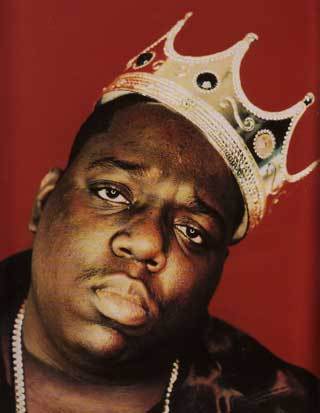
No doubt Notorius B.I.G., aka Biggie Smalls, aka Christopher George Latore Wallace was one of the most influential figures in rap history, let alone one of the biggest (figuratively and literally) musicians of the nineties, but I, for one, think Biggie deserves a little more than that.
On the other hand, Notorious B.I.G. was a legacy, a controversial figure who ascended from the streets only to wind up crashing in his prime. The story writes itself, no? I didn't have a chance to delve into his music lifestyle at the time it came out (owing to me being too young and too, well, pigmentally challenged.) However, I did have a chance to listen to most of "Life after Death" on a car ride to Brooklyn on a film shoot. In total, Biggie Smalls is an image, a part of time and a place that only comes around once; it was inevitable that he get a movie sooner or later. So, what better place to see it than in Brooklyn?
My first indication of the effect of this film was the presence of PO at the door. My first instincts were only confirmed when I got to the theater. Even though I arrived about a half an hour early, I had to sit in the neck-breaking seats in the very front. As one movie-goer put it, "some good-ass seats."
After a mind-numbing 3 Doors Down National Guard commercial that made me forget what good music sounds like, the "Notorious" Experience began.
What I'm about to write next may be a major spoiler for some of you, but it's more of a statement of fact. The movie starts with, well; to put it bluntly (cough cough,) Biggie gets shot. In one moment, my expectations went down the drain like yesterdays bath water. I had naïvely hoped, in my film-critic's optimism, that George Tillman Jr. and Sean P. Combs could put together something totally original in this age of carbon-copy music biopics.
It seems like at some future date, no matter what genre or artist you are into, there will be a biopic for you. Before I continue with this review, I'll take a moment to spell out the basic formula: young, disillusioned artist is an outcast; he finds music as a channel for his talents and quickly becomes popular; as his star rises, he goes out, screws a lot of women, has a bunch of babies, and does tons of drugs. Finally, he crashes, loses everything, and has to find himself again, either through spirituality, the music, or more drugs and sex.
And, "Notorious" is no exception. If you've seen "Ray," "Walk the Line," "Sid and Nancy," or even, "Walk Hard, The Dewey Cox Story," you've got the basic gist of what happens. Except, in Notorious there are a lot more swearing and titties. I was even waiting for someone to say, "he needs more blankets and less blankets at the same time!"
By the way, Lil' Kim gets all sorts of naked in this move, which no-one has a problem with. (Well, as long as it's not actually her.)
What perturbed me about this film was the handling of the transitions; some scenes would cut through literally years without any explanation. In one cut, Biggie suddenly has another kid. Sometimes it works, however. For example, Biggie goes from talking to Lil' Kim (Naturi Naughton, more like, Naturi HOTton (bad joke,)) to gettin' it ON in one brilliant cut.
To be fair, everyone put in a great performance in this film. Jamal Woolard was thoroughly convincing as the legendary B.I.G. Angela Basset also delivered. Some parts, which weren't over the top or formulaic, were incredibly touching and deep. In one scene, a friend from the streets, who went to jail rather than allow Biggie to sacrifice his burgeoning career, returns to console an ailing Smalls in the hospital after his accident.
But for every place where is shines, "Notorious" falls just as hard. Some of the dialogue was extremely contrived, as if the idea was, "Let's give Biggie the most ghetto thing to say." When informed of his first child, T'Yanna, Smalls responds, "Damn." Also, the whole East-Coast West-Coast rivalry was handled EXTREMELY gingerly, avoiding taking sides at all costs, and defending Biggie's claim at the same time.
Tupac and B.I.G. were portrayed as, if I may insert a white-ism, "bro's." Then, after the 1994 shooting happens, the whole dynamic does a one-eighty. I'm perfectly willing to admit that I'm not the most qualified person to examine hip-hop history (say that three times fast, G,) but it seems to me there's much more to it that what was put on the screen. Moreover, some of the way the material was handled was (for me) a bit tame. If you listen to Biggie's music, he talks about some sick shit. These were people who DID come from the streets, who did deal and struggle and commit various crimes, something which is lost on a polished movie set. It's not enough to throw around the F-word and show some fantastic breasts; everything you hear on a street corner in Brooklyn, for instance, ain't gonna make it up on the B.I.G. Screen. Word.
I guess the final nagging point that I'm hammering away at here is this: Biggie Smalls was such an interesting person and lead such an interesting life that his biopic practically writes itself. Moreover, relying on formulas to tell stories, especially those that could be better told without, is one of my core gripes with Hollywood. It gets to the point where you can set your watch to dramatic events.
Or maybe I'm whipping a dead horse.
So, if you like music biopics, and you like Biggie, "Notorious" is the movie for you. If you don't like music and you don't like movies, then you should probably get out more.
One final note: the fact that Puff Daddy (or Sean "Diddy," or P. Diddy, or Poo Doodley, or whatever he wants to call himself nowadays) did not appear in the movie, but only executive produced it endears me to him just a little bit.
It's just a matter of time before we see the Tupac movie.
Schrader out.
January 7, 2009
Forgotten in '08: 'Shrooms'

In my research for the best (and worst) films of 2008, I came across this little emerald from the land of Leprechauns and whiskey, Ireland. Relative new-comer to the states, Paddy Breathnach directs Pearse Elliott's swan-song of drug use. "Shrooms" tries to combine the usually fraternal "stoner crowd," and "cheezy horror flick crowd" by creating a horror movie centered around the search and consumption of psilocybin mushrooms.
Rundown of fodder characters:
Tara - Lindsey Haun: The heroine, whose ingestion of an ordinarily toxic mushroom gives her the power to see the future in her dreams. (Most people go to Ireland to kiss the Blarney stone and get the gift of gab, but I think this is a fair trade off.)
Jake - Jack Huston: The dreamy, dark, mysterious, "in the know" character, who rescues Tara from her deadly trip with mouth to mouth, which, when you're dealing with poisoning, is a really REALLY bad idea.
Troy - Max Kasch: A Jay (of "Jay and Silent Bob" fame) lookalike, who astoundingly makes all the other bobble-heads look intelligent by comparison.
Lisa - Maya Hazen: The slightly-hotter-than-the-others chick who contributes nothing to the plot but an endless hatred for anything less pretty than she.
Holly - Alice Greczyn: To call this one the ditz would be like calling Sarah Jessica Parker "the ugly one" in "Sex and the City."
Bluto - Robert Hoffman: See above.
The film centers around a cabal of brainless American brats who travel to the backwoods of Ireland (the mecca of consciousness-expansion) for the sole purpose of "tripping" on "shrooms." Jack, er, I mean, Jake warns the group not to eat Death Cap Shrooms, which look similar to the "magic" variety, but, apparently, Tara was thinking about her hair during that speech, wanders off on her own, and eats one anyway. Now, I wouldn't know anything about Amanita phalloides, but I do know that poisonous mushrooms do a lot of things besides "giving you the gift of foresight." When Tara ingests the cap, she is miraculously able to see the future; when, in reality, she would have jaundice, hypoglycemia, and massive organ failure before erupting in explosive diarrhea, and dying. But that doesn't make for a very attractive film. (Or does it?)
Also, A. phalloides doesn't look anything like in the movie.
Before the halfway point, the entire cast hates one another, and everyone is totally suspicious of each other peeping on their bedroom escapades (or, rather, back-of-a-truck escapades.) Then, Bluto (neither Popeye's arch-nemisis, nor John Belushi in Animal House,) in a funk, drinks an elixir of the stuff, wanders through the woods, where he sees a talking cow, then, inexplicably sticks his manhood into the window of a dilapidated car. And, to make matters worse, while cavorting around in his undershorts, apparently, he had possession of ALL of their cell-phones! Oh no! Good idea alert #1: Give your only means of communication to the dumbest member of the group!
Despite all I might say, this film has THE best depiction of a talking cow EVER in film history.
This is the point at which the film's plot takes off like a truant truck driver, pepped up on goofenthal, with a full tank of gas and a dead hooker in the trunk, as the horror from the film doesn't stem (yuk) from anything relating to the characters, but rather, on situations which could happen, were one to be under the influence of psychedelic drugs. To reiterate: nothing scary actually happens; it's all, "is he/she tripping, or is this actually happening?" Well, put down your hash-pipe, Sgt. Pepper, and light a stick of incense, 'cuz you just described everything in this movie.
So, in their incapacitated states, rather than sitting tight until they sober up and resuming the search with level heads (you know, like sane people would do,) Tara leads a G.I. Joe platoon of buxom ladies into the woods to rescue their dear friend.
Then, of course, Holly comes across a "Blair Witch Project" shelter, which she, of course, runs up to and inquires of the "Deliverance" hill-people for help. They direct her to a phone with the brilliant line: "You asked 'did we have a phone?' You didn't ask 'does it work?'" And, of COURSE! She is mercilessly slaughtered.
Tall, Dark, and Stupid leads Jason Mewes to go find the girls, when they start tripping and slip away with an elegant, "fuck this!" Lisa pushes Tara into a swamp, where she foresees their companion's death… previously… Hey, wait a minute! I thought foresight only worked FORwards! Oh man, somebody sold me some bad A. phalloides.
Anyway, it is then that Tara opens up to her companion about her new skills, to which, Lisa responds by screaming and running into the swamp. Good idea alert #2, when on mind altering substances in the open, separate from your only companion! And, as if that wasn't good enough, after Lisa has a run in with whatever evil meanie is killing everybody, Tara wanders right in after her!
Somehow, the three remaining survivors meet up in the same dilapitated shack, and are systematically hunted down by the film's villain: A GUY IN A BURLAP SACK WITH A REALLY BIG HUNTING KNIFE. That's it. That's scary. I mean, that's scary? Well, sure, if you're unarmed and on drugs, but, seriously?
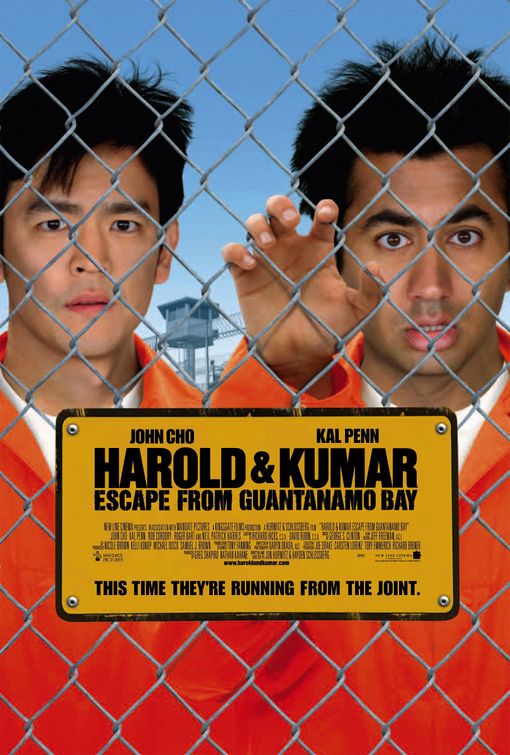
The one point this film misses more than anything is, it's always a bad idea to presuppose the audience will be on drugs. First, anything when viewed under the influence of drugs will automatically be "awesome." (Case in point: The "Harold and Kumar" franchise.) Second, anything which is supposed to be viewed while on drugs will be HEINOUS when viewed sober. (Case in point: "HELP!") Third, and finally, if you're going to make a movie about drugs, you'd better be ready to shell out some real dough for trippy special effects. The "tripping" effects in this film were scaled way down (not that I would know, cough, cough,) to little more than a fish-eye lens. (In contrast to say, "Fear and Loathing in Las Vegas.")
On top of having a plot with the consistency of swiss cheese, this film is home to some dialogue gems such as:
Tara: "Something really shitty could've happened to Bluto!"
To which Troy replies: "Shit happens."
Tara: "I overdosed on the heroin of shrooms!" (Krosman: What does that even mean? Does she need more shrooms to survive?)
Deliverance guy 1
"Lovely tongue on a bull calf."
"Fuck reality." (I think this should have been the tagline.)
T: "I've got a feeling!" (A feeling deep inside, oh yeah!)
L: "The feeling has us in shit creek!" She then pushes Tara into the mud.
Special thanks to Krosman for creative input.
Schrader out.
P.S. While the imdb page lists 2006 as the release date, "Shrooms" was released in the States in '08, so kick yourself for not going to see it in theaters last year.