February 4, 2009

TAKASHI MIIKE IN NY!!

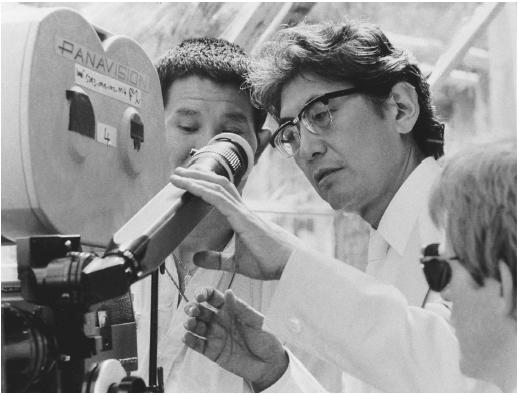
I was told by somebody today after kendo class that director Miike will be in town this Saturday. I was just on the Japan Society website yesterday and I didn't see it so I was skeptical. When I went home to verify, sure enough, it was there!

So...

Takashi Miike, director of such films as Audition, Ichi, the Killer, and Visitor Q, will be giving a lecture on his filmmaking behind the scenes this Saturday (2/7) at 2 PM at the Japan Society. Make sure to call the box office for tickets before hand. It's only $7 for students! Also, there's going to be a reception following the lecture so you can meet him in person! 


Be sure to check it out!!

February 3, 2009

Art Theatre Guild of Japan Showcases Films in NY


Beginning February 18th to March 1st, the Japan Society will be screening selected works from the Art Theater Guild (ATG). 

The following is from the official website:

Founded in 1961 as a distributor of European art films in Japan, the Art Theater Guild (ATG) began co-producing independent films in 1967, and quickly established itself as the leading platform for highly experimental and innovative film. For three decades, ATG played a decisive role in the development of art-house films in Japan, often dealing with the most controversial subjects from incest, anarchism, and gay culture to capital punishment. Although many filmmakers such as Nagisa Oshima, Yoshishige Yoshida and Shuji Terayama gained international recognition through their films made in cooperation with ATG, the Art Theatre Guild is still little known outside of Japan. This 12-film series curated by Roland Domenig and Go Hirasawa focuses on the first decade of ATG and on the Shinjuku Bunka, ATG's flagship theater, which formed a unique intersection of filmmakers and artists of all kind in Shinjuku, the center of Japan’s vibrant counterculture.

FEATURED FILMS:

Pitfall (Otoshiana, Hiroshi Teshigahara, 1962) 
Silence Has No Wings (Tobenai chinmoku, Kazuo Kuroki, 1966)
A Man Vanishes (Ningen johatsu, Shohei Imamura, 1967)
Crazy Love (Kureiji rabu, Michio Okabe, 1968)
Death by Hanging (Koshikei, Nagisa Oshima, 1968)
The Inferno of First Love (Hatsukoi jigokuhen, Susumu Hani, 1968)
Double Suicide (Shinju ten no Amijima, Masahiro Shinoda, 1969)
Funeral Parade of Roses (Bara no soretsu, Toshio Matsumoto, 1969)
Eros plus Massacre (Erosu + gyakusatsu, Kiju Yoshida, 1970)
This Transient Life (Mujo, Akio Jissoji, 1970)
Throw Away Your Books, Let's Go into the Street (Sho wo suteyo machi e deyo, Shuji Terayama,1971, pictured)
Ecstasy of the Angels (Tenshi no kokotsu, Koji Wakamatsu, 1972)

February 2, 2009

Film Essays and Events Around New York City

Last summer at the Herzog discussion, the curator of the program introduced a very useful (and immensely interesting) website where you can find any film related event that is taking place around the world!

You can check it out here at:

Not only that, many film essays are also posted up which may come in handy in film classes that you may be taking.

If you are taking SPECIFIC TOPICS: 80'S CINMEA with Professor McElhaney, then you might want to read this article on Independent cinema in America during the 80s. If you were to do one of the essays for his class, I'm sure this site could come in handy.

Also, be sure to check back occasionally because I'll be posting some film related events that are occurring at Hunter and the NYC area. 

January 26, 2009

NOTORIOUS: The Experience


In the last few years, there has been enough of an explosion of music-biopic pictures to warrant their own category in the Academy Awards. That being said,
NOTORIOUS was very much that, another music-biopic.

No doubt
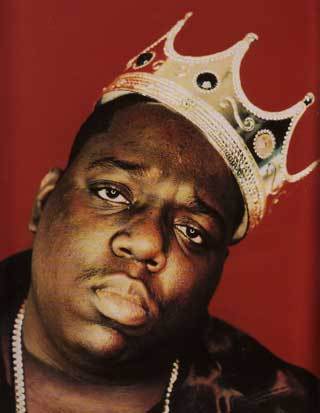
Notorius B.I.G., aka Biggie Smalls, aka Christopher George Latore Wallace was one of the most influential figures in rap history, let alone one of the biggest (figuratively and literally) musicians of the nineties, but I, for one, think Biggie deserves a little more than that.

On the other hand, Notorious B.I.G. was a legacy, a controversial figure who ascended from the streets only to wind up crashing in his prime. The story writes itself, no? I didn't have a chance to delve into his music lifestyle at the time it came out (owing to me being too young and too, well, pigmentally challenged.) However, I did have a chance to listen to most of "Life after Death" on a car ride to Brooklyn on a film shoot. In total, Biggie Smalls is an image, a part of time and a place that only comes around once; it was inevitable that he get a movie sooner or later. So, what better place to see it than in Brooklyn?

My first indication of the effect of this film was the presence of
PO at the door. My first instincts were only confirmed when I got to the theater. Even though I arrived about a half an hour early, I had to sit in the neck-breaking seats in the very front. As one movie-goer put it, "some good-ass seats."

After a mind-numbing 3 Doors Down National Guard commercial that made me forget what good music sounds like, the "Notorious" Experience began.

What I'm about to write next may be a major spoiler for some of you, but it's more of a statement of fact. The movie starts with, well; to put it bluntly (cough cough,) Biggie gets shot. In one moment, my expectations went down the drain like yesterdays bath water. I had naïvely hoped, in my film-critic's optimism, that George Tillman Jr. and Sean P. Combs could put together something totally original in this age of carbon-copy music biopics.

It seems like at some future date, no matter what genre or artist you are into, there will be a biopic for you. Before I continue with this review, I'll take a moment to spell out the basic formula: young, disillusioned artist is an outcast; he finds music as a channel for his talents and quickly becomes popular; as his star rises, he goes out, screws a lot of women, has a bunch of babies, and does tons of drugs. Finally, he crashes, loses everything, and has to find himself again, either through spirituality, the music, or more drugs and sex.

And, "Notorious" is no exception. If you've seen "Ray," "Walk the Line," "Sid and Nancy," or even,
"Walk Hard, The Dewey Cox Story," you've got the basic gist of what happens. Except, in Notorious there are a lot more swearing and titties. I was even waiting for someone to say, "he needs more blankets and less blankets at the same time!"

By the way,
Lil' Kim gets all sorts of naked in this move, which no-one has a problem with. (Well, as long as it's not actually her.)

What perturbed me about this film was the handling of the transitions; some scenes would cut through literally years without any explanation. In one cut, Biggie suddenly has another kid. Sometimes it works, however. For example, Biggie goes from talking to Lil' Kim (Naturi Naughton, more like, Naturi HOTton (bad joke,)) to gettin' it ON in one brilliant cut.

To be fair, everyone put in a great performance in this film.
Jamal Woolard was thoroughly convincing as the legendary B.I.G. Angela Basset also delivered. Some parts, which weren't over the top or formulaic, were incredibly touching and deep. In one scene, a friend from the streets, who went to jail rather than allow Biggie to sacrifice his burgeoning career, returns to console an ailing Smalls in the hospital after his accident.

But for every place where is shines, "Notorious" falls just as hard. Some of the dialogue was extremely contrived, as if the idea was, "Let's give Biggie the most ghetto thing to say." When informed of his first child, T'Yanna, Smalls responds, "Damn." Also, the whole East-Coast West-Coast rivalry was handled EXTREMELY gingerly, avoiding taking sides at all costs, and defending Biggie's claim at the same time.

Tupac and B.I.G. were portrayed as, if I may insert a white-ism, "bro's." Then, after the 1994 shooting happens, the whole dynamic does a one-eighty. I'm perfectly willing to admit that I'm not the most qualified person to examine hip-hop history (say that three times fast, G,) but it seems to me there's much more to it that what was put on the screen. Moreover, some of the way the material was handled was (for me) a bit tame. If you listen to Biggie's music, he talks about some sick shit. These were people who DID come from the streets, who did deal and struggle and commit various crimes, something which is lost on a polished movie set. It's not enough to throw around the F-word and show some fantastic breasts; everything you hear on a street corner in Brooklyn, for instance, ain't gonna make it up on the B.I.G. Screen. Word.

I guess the final nagging point that I'm hammering away at here is this: Biggie Smalls was such an interesting person and lead such an interesting life that his biopic practically writes itself. Moreover, relying on formulas to tell stories, especially those that could be better told without, is one of my core gripes with Hollywood. It gets to the point where you can set your watch to dramatic events.

Or maybe I'm whipping a dead horse.

So, if you like music biopics, and you like Biggie, "Notorious" is the movie for you. If you don't like music and you don't like movies, then you should probably get out more.

One final note: the fact that Puff Daddy (or Sean "Diddy," or P. Diddy, or Poo Doodley, or whatever he wants to call himself nowadays) did not appear in the movie, but only executive produced it endears me to him just a little bit.

It's just a matter of time before we see the Tupac movie.

Schrader out.

January 7, 2009

Forgotten in '08: 'Shrooms'

Happy New Year!

In my research for the best (and worst) films of 2008, I came across this little emerald from the land of Leprechauns and whiskey, Ireland. Relative new-comer to the states, Paddy Breathnach directs Pearse Elliott's swan-song of drug use. "Shrooms" tries to combine the usually fraternal "stoner crowd," and "cheezy horror flick crowd" by creating a horror movie centered around the search and consumption of psilocybin mushrooms. 


Rundown of fodder characters:

Tara - Lindsey Haun: The heroine, whose ingestion of an ordinarily toxic mushroom gives her the power to see the future in her dreams. (Most people go to Ireland to kiss the Blarney stone and get the gift of gab, but I think this is a fair trade off.)

Jake - Jack Huston: The dreamy, dark, mysterious, "in the know" character, who rescues Tara from her deadly trip with mouth to mouth, which, when you're dealing with poisoning, is a really REALLY bad idea.

Troy - Max Kasch: A Jay (of "Jay and Silent Bob" fame) lookalike, who astoundingly makes all the other bobble-heads look intelligent by comparison.

Lisa - Maya Hazen: The slightly-hotter-than-the-others chick who contributes nothing to the plot but an endless hatred for anything less pretty than she.

Holly - Alice Greczyn: To call this one the ditz would be like calling Sarah Jessica Parker "the ugly one" in "Sex and the City."

Bluto - Robert Hoffman: See above.


The film centers around a cabal of brainless American brats who travel to the backwoods of Ireland (the mecca of consciousness-expansion) for the sole purpose of "tripping" on "shrooms." Jack, er, I mean, Jake warns the group not to eat Death Cap Shrooms, which look similar to the "magic" variety, but, apparently, Tara was thinking about her hair during that speech, wanders off on her own, and eats one anyway. Now, I wouldn't know anything about Amanita phalloides, but I do know that poisonous mushrooms do a lot of things besides "giving you the gift of foresight." When Tara ingests the cap, she is miraculously able to see the future; when, in reality, she would have jaundice, hypoglycemia, and massive organ failure before erupting in explosive diarrhea, and dying. But that doesn't make for a very attractive film. (Or does it?)


Also, A. phalloides doesn't look anything like in the movie.


Before the halfway point, the entire cast hates one another, and everyone is totally suspicious of each other peeping on their bedroom escapades (or, rather, back-of-a-truck escapades.) Then, Bluto (neither Popeye's arch-nemisis, nor John Belushi in Animal House,) in a funk, drinks an elixir of the stuff, wanders through the woods, where he sees a talking cow, then, inexplicably sticks his manhood into the window of a dilapidated car. And, to make matters worse, while cavorting around in his undershorts, apparently, he had possession of ALL of their cell-phones! Oh no! Good idea alert #1: Give your only means of communication to the dumbest member of the group!


Despite all I might say, this film has THE best depiction of a talking cow EVER in film history.


This is the point at which the film's plot takes off like a truant truck driver, pepped up on goofenthal, with a full tank of gas and a dead hooker in the trunk, as the horror from the film doesn't stem (yuk) from anything relating to the characters, but rather, on situations which could happen, were one to be under the influence of psychedelic drugs. To reiterate: nothing scary actually happens; it's all, "is he/she tripping, or is this actually happening?" Well, put down your hash-pipe, Sgt. Pepper, and light a stick of incense, 'cuz you just described everything in this movie.


So, in their incapacitated states, rather than sitting tight until they sober up and resuming the search with level heads (you know, like sane people would do,) Tara leads a G.I. Joe platoon of buxom ladies into the woods to rescue their dear friend.


Then, of course, Holly comes across a "Blair Witch Project" shelter, which she, of course, runs up to and inquires of the "Deliverance" hill-people for help. They direct her to a phone with the brilliant line: "You asked 'did we have a phone?' You didn't ask 'does it work?'" And, of COURSE! She is mercilessly slaughtered.


Tall, Dark, and Stupid leads Jason Mewes to go find the girls, when they start tripping and slip away with an elegant, "fuck this!" Lisa pushes Tara into a swamp, where she foresees their companion's death… previously… Hey, wait a minute! I thought foresight only worked FORwards! Oh man, somebody sold me some bad A. phalloides.


Anyway, it is then that Tara opens up to her companion about her new skills, to which, Lisa responds by screaming and running into the swamp. Good idea alert #2, when on  mind altering substances in the open, separate from your only companion! And, as if that wasn't good enough, after Lisa has a run in with whatever evil meanie is killing everybody, Tara wanders right in after her!


Somehow, the three remaining survivors meet up in the same dilapitated shack, and are systematically hunted down by the film's villain: A GUY IN A BURLAP SACK WITH A REALLY BIG HUNTING KNIFE. That's it. That's scary. I mean, that's scary? Well, sure, if you're unarmed and on drugs, but, seriously?


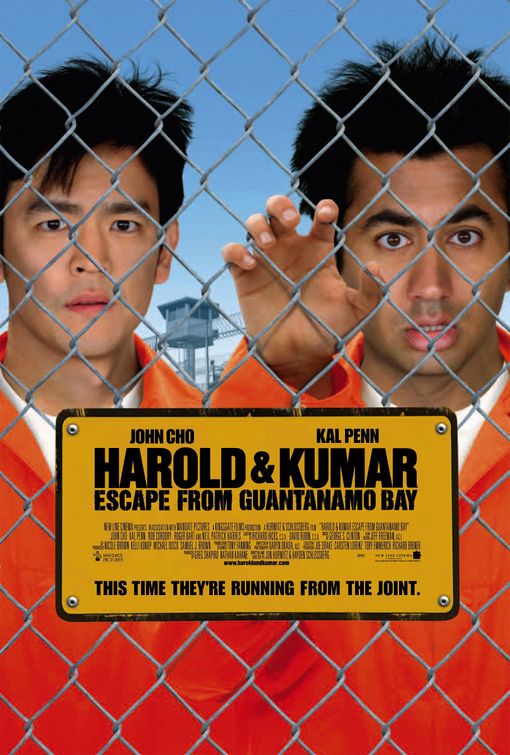
The one point this film misses more than anything is, it's always a bad idea to presuppose the audience will be on drugs. First, anything when viewed under the influence of drugs will automatically be "awesome." (Case in point: The "Harold and Kumar" franchise.) Second, anything which is supposed to be viewed while on drugs will be HEINOUS when viewed sober. (Case in point: "HELP!") Third, and finally, if you're going to make a movie about drugs, you'd better be ready to shell out some real dough for trippy special effects. The "tripping" effects in this film were scaled way down (not that I would know, cough, cough,) to little more than a fish-eye lens. (In contrast to say, "Fear and Loathing in Las Vegas.")


On top of having a plot with the consistency of swiss cheese, this film is home to some dialogue gems such as:

Tara: "Something really shitty could've happened to Bluto!"

To which Troy replies: "Shit happens."


Tara: "I overdosed on the heroin of shrooms!" (Krosman: What does that even mean? Does she need more shrooms to survive?)


Deliverance guy 1

"Lovely tongue on a bull calf."

"Fuck reality." (I think this should have been the tagline.)


T: "I've got a feeling!" (A feeling deep inside, oh yeah!)

L: "The feeling has us in shit creek!" She then pushes Tara into the mud.


Special thanks to Krosman for creative input.


Schrader out.


P.S. While the imdb page lists 2006 as the release date, "Shrooms" was released in the States in '08, so kick yourself for not going to see it in theaters last year.

November 25, 2008

NEW WEBSITE

The Criterion Collection has just revamped their whole site and it ROCKS!!

They now have films that you can rent online, essays from previous laserdisk editions of their collection, and a forum.

VISIT IT NOW AT WWW.CRITERION.COM

October 9, 2008

Happy birthday to one of our bloggers


Drinking "Kurosawa" Sake.

Happy Bday, Daigoro!

October 2, 2008

Nagisa, Godfather, DVDs, and more!

It's been a while since the blog has been updated and many things have been happening since the last entry.

In the midsts of the all the politics, school work, jobs, and other college drama you may be in, New York City has been hosting some great film events.

One of them being the retrospective of the famous Japanese director Nagisa Oshima at the New York Film Festival. Although he may not be a household name in the States when talking about Japanese cinema, he is incredibly well known domestically. His most well known/controversial film, In the Realm of Senses (1976), is still unavailable uncenscored in Japan. Many of his films are being shown at the Lincoln Center. See the full program here for tickets and showtimes.


Also, the Film Forum is showing a new 35mm print of The Godfather Part I and II. Apparently, the print is so incredibly clean and crisp, it's like watching a new film. I wanted to post it up earlier but I just never got the time. Starting today for 2 weeks, they will be showing a Marathon screening of both parts. Just make sure you bring cash if you didn't buy tickets online! I learned the hard way... Check the schedule here.


Now moving on to new Criterion Collection releases: they are now making the transition to Blu-Ray DVDs. Starting November, they will be re-releasing old DVDs (The Third Man, The Last Emperor, The Man Who Fell to Earth) and releasing Wes Anderson's Bottle Rocket and Wong Kar-Wai's Chungking Express on Blu-Ray and regular DVDs. They also have plans to release great films such as Wages of Fear, Contempt, and The 400 Blows later. Also, make sure to check out their Eclipse series which features hard-to-find films by famous directors.


Also, I'm working on a new project which is scheduled to start production in mid-November. I have begun the casting process and will plan to audition in late October. You will find flyers for it next week on the bulletin boards of Hunter so keep a look out for those. For more details, click here. The film is called "Everyman".

August 17, 2008

The Politics of The Dark Knight

The Dark Knight has been the centerpiece of this Summer's slate of blockbusters. I found it to be surprising intense and cynical for a superhero movie. That said, it was a damn good superhero movie and one worth retrospection. I had some particular thoughts about the political side of the film outlined in a sketch below.

THERE ARE SPOILERS (that, and the unacquainted won't understand what the hell I am talking about. Just see the damn movie already.)


When comic book adaptations come to mind, I've been more disposed to think of the smarmy excesses of Robert Downey, Jr.'s Iron Man or the big, bright CGI cluttered vision of New York in the recent Spiderman series. With The Dark Knight (and like minded forerunner Batman Begins), Christopher Nolan and crew seem hellbent on creating a gritty comic universe, a more realistic reflection of the modern metropolis.

The idea of 'realism' in big screen comic stories is slippery territory. What The Dark Knight has created is a lavish allegory on politics and American manias. Batman is cast- strangely enough for a subterranean, anti-hero- as a conservative superman. Conservatism might be the last tag that comes to mind when thinking of Bruce Wayne and his alter ego but it seems an apt description in Nolan's world.

For one, Batman's dependance on and faith in technology to vanquish his foes is a reminder of America's own technologic and militaristic ventures. 20th century America is bound to be remembered for innovations (often dubious) like the Manhattan Project and the U2 spy plane. This is a nonpartisan fixation but has been marked by distinctly conservative projects like the Regan era Strategic Defense Initiative.

Nolan's Dark Knight takes Batman's traditional utility belt a step further with an endless bevy of vague technological implements that are dispensed with the convenience of plot. If it seems like a bad guy has got Bats on the ropes, then our hero is likely to bust out some obscure device to turn the tables. Batman's cutting edge gear is juxtaposed with the Joker's ramshackle assortment of goods; cell phone rigged bombs and moth eaten suits wired with grenades. A scene late into the movie has Joker in full nurse garb bashing away at a fickle detonator. With Batman cast as conservative hero, this is the perfect image of contrast. Joker is a sexual and political subversive playing with his homemade tech goods.

The film is most aware of this conservative/radical dialectic when Batman employs an experimental radar system to track down the Joker. He creates a city-spanning network that opens up the possibility of spying on any or all of the denizens of Gotham City. This moral dilemma calls to mind the privacy issue in America sparked by Patriot Act. Batman takes advantage of the system despite the resistance of his technological consultant, Lucius Fox. Although the film closes with the destruction of the spy network, a compromise has been made. In the face of defeat, Batman (and in this allegory, America) has suspended morality for the sake of control. While The Dark Knight closes suspended in air, just like the Joker, it does seem to resolve the issue of Batman's heroism with Jim Gordon's epilogue. With Batman re-anointed Gotham's rebel savior, it appears the film endorses his (our) moral lapse.

August 9, 2008

The French Crime Wave at the Film Forum


I'm not the biggest fan of French New Wave Cinema. However, for a reason I can't fully express in words, I do love Jean-Pierre Melville. Since seeing Le Samourai, I've been religiously watching all of his films that have been released by Criterion (and two more are coming out in October, by the way). His films, although not the greatest, have an extremely interesting and certain appeal to me which ranks him as one of the most interesting filmmakers in my constantly changing list of "favorite directors". So, when I saw that the Film Forum is going to show a few Melville's, I thought that I should share the information.

"The French Crime Wave" event started yesterday and will run until September 11th, which is more than enough time to catch some great films. The Melville films that are going to be screened are Le Cercle Rouge (which is one of my favorite Melville's), Bob le Flambeur, Le Doulos (which comes out on Criterion in October), and Un Flic (which is out of print on DVD).

However, if you are not a big fan of Melville, do not fear. There are tons of other great flicks to check out from New Wave directors such as Truffaut, Godard, Clouzot, and many others!

To see the full program, click HERE!